 WeCampaign
Running a Campaign on a Neighbor Island: A Field Guide for Maui, the Big Island, and Kauai
Neighbor island campaigns operate in a fundamentally different environment than Oahu races. Here's what makes them distinct — and how to build a field operation that fits.
WeCampaign Team
The conventional wisdom in Hawaii politics is that elections are won or lost on Oahu. There’s truth to that at the statewide level — Honolulu County is home to roughly 70 percent of the state’s registered voters. But that statistic obscures how many important races are decided entirely on the neighbor islands, and how much a field operation needs to be tailored to succeed there.
If you’re running for state house on Maui, or county council on the Big Island, or any office on Kauai, the realities of canvassing density, volunteer availability, travel logistics, and voter data quality are genuinely different from an Oahu race. Here’s what’s actually different about neighbor island campaigns, and what it means for how you organize.
Geography Is Not Optional
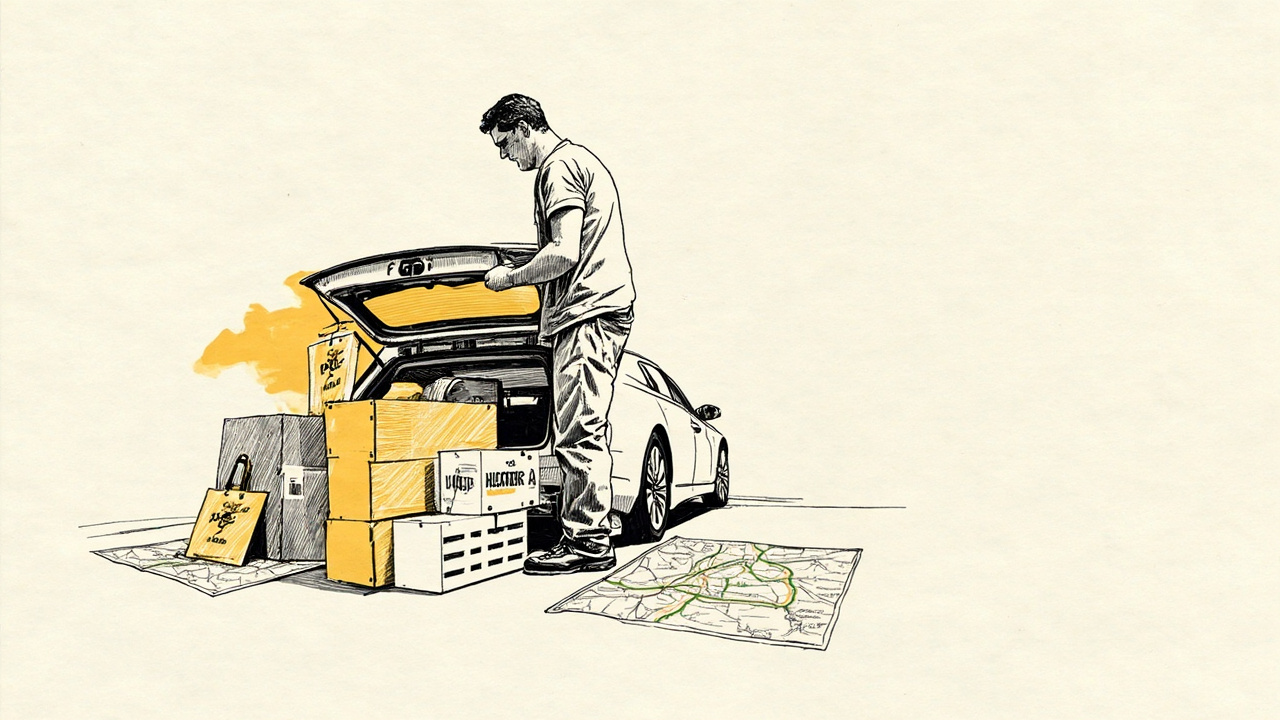
The first thing mainland campaign tools get wrong about Hawaii is treating each island as a compact, walkable geography. It is not. Hawaii County — the Big Island — is the largest county in the United States by land area. Driving from Kona on the west side to Hilo on the east side takes roughly 90 minutes under normal conditions. Driving from Hilo into the Puna district, or from Waimea down to Hamakua, adds another 40 to 60 minutes each way.
This matters for canvassing in ways that most field models don’t account for. On Oahu, a skilled canvasser working a suburban Honolulu precinct might knock 40 to 60 doors in a three-hour shift. The same canvasser working a rural Puna precinct on the Big Island might knock 15 to 20 doors in the same window — because the doors are spread across half a mile of unpaved road, not a grid of residential blocks.
Canvass plans that are built around Oahu door-per-hour assumptions will systematically underestimate the time and volunteer hours required to run field operations in rural Big Island, South Maui, or the westside of Kauai. If your campaign software doesn’t let you set island- and precinct-specific walk time assumptions, you’re building your field plan on bad math.
Voter File Quality Varies by Island
Hawaii’s statewide voter file is maintained centrally by the Office of Elections, but data quality — particularly address completeness and accuracy — varies significantly across islands and precincts.
On Oahu, most voter addresses map cleanly to standard street address formats. The transient-population problem is real (military households, renters near UH Manoa), but geocoding and canvassing route-building are generally straightforward.
On the neighbor islands, the picture is messier. Several factors create address complexity that doesn’t show up in statewide data:
Rural routes and non-standard addressing. Parts of the Big Island, particularly in agricultural and rural residential areas, use addressing formats that don’t reliably geocode. Voters in these areas may have addresses that look clean in the voter file but don’t resolve to a walkable map point.
Frequent address changes in high-turnover communities. On Maui, housing pressure has driven significant population movement in communities like Wailuku, Kahului, and the Kihei corridor. Renters move frequently, and voter registration records sometimes lag behind residential reality. A canvass universe that’s been filtered by address but not by recent voting history will contain a higher-than-expected share of outdated records.
Kauai’s dispersed residential patterns. Outside of Lihue, Kauai’s population is spread across multiple distinct communities — Kapaa, Princeville, Hanapepe, Waimea — each with its own character and logistics. Unlike a Honolulu race where you might focus on a contiguous set of precincts, a Kauai campaign often needs to build separate field operations for each community cluster with minimal shared infrastructure.
Volunteer Scarcity Is Real and Has to Be Planned For
The most underestimated challenge in neighbor island campaigns is volunteer supply. On Oahu, even a modestly resourced campaign can generally find enough warm bodies to staff canvassing shifts and phone banks. The population concentration helps, but so does the organizational infrastructure — labor unions, community groups, and party clubs that have existing volunteer pipelines.
On the neighbor islands, that infrastructure is thinner. Maui’s labor movement is active but concentrated in specific sectors. Kauai’s total population is under 75,000 people. The Big Island’s civic organizations are strong in some communities (Hilo has a relatively engaged local political culture) but sparse in others.
The practical consequence: neighbor island campaigns need to be more efficient per volunteer hour than their Oahu counterparts. You cannot make up for volunteer scarcity by throwing more people at a problem. You need to maximize the output of the people you have, which means precise targeting — sending your canvassers only to the highest-priority doors, not carpet-bombing a precinct — and real-time data collection so that you can adapt your plan based on what you’re learning in the field.
Campaigns that treat canvassing as a volume game (more doors, more calls, more contacts) rather than a precision game tend to burn out their limited neighbor island volunteer corps before the final push in July.
The Mail Ballot Reality Is Different by Island
Hawaii’s vote-by-mail system is universal, but ballot infrastructure on the neighbor islands creates operational differences that matter.
Drop box availability is more limited. On Oahu, there are dozens of drop box locations spread across the island. On Kauai, the options are significantly more concentrated. On the Big Island, voters in remote rural communities may have limited easy access to a drop box. This means ballot-chase operations on the neighbor islands need to emphasize mail return — reminding voters to mail their ballots back — more heavily than they might on Oahu, where dropping a ballot in person is low-friction for most voters.
Ballot cure capacity differs. When Hawaii election officials identify a mail ballot with a signature mismatch or other curable defect, they notify the voter to correct it. On Oahu, voters can often fix the problem at an election division office relatively quickly. On the neighbor islands, in-person cure is logistically harder, which means campaigns need to build more aggressive phone outreach into their ballot-cure follow-up programs.
What a Neighbor Island Campaign Actually Needs
The tools that work for Oahu campaigns are not wrong, exactly — they’re just calibrated for a context that doesn’t match what you’re operating in. Here’s what a neighbor island campaign actually needs from its data and field platform:
Precinct-level granularity that accounts for geography. Your canvassing routes should be built around actual travel time, not block density. The Big Island’s Puna district and Kauai’s North Shore both require route-building logic that accounts for road time between doors, not just walking distance within a block.
Address quality filtering before you build your universe. Pulling a universe with outdated or un-geocodeable addresses doesn’t just waste canvass hours — it demoralizes volunteers who show up to knock a door that doesn’t exist. Hawaii-specific address cleaning should be a built-in step, not an afterthought.
Efficiency-first targeting. Neighbor island campaigns can’t afford to canvass low-probability voters at scale. Your targeting model needs to be tight enough that the doors your volunteers knock are the doors most likely to produce a result — a persuadable voter, an unmobilized supporter, a ballot-chase contact.
Mail-first ballot chase. Build your August ballot-return operation around mail outreach and phone contact, not in-person drop box reminders. For many neighbor island voters, mailing back the ballot is the path of least resistance, and your program should reinforce that.
The infrastructure for running a smart neighbor island campaign exists. It just has to be set up for the specific realities of each island — not inherited from a playbook built for Honolulu. Campaigns that make that distinction, and build accordingly, have a significant structural advantage over campaigns that treat Maui like a smaller version of Oahu.
It isn’t. Neither is the Big Island, or Kauai. And the campaigns that know that win at rates that consistently surprise people who thought statewide averages told the whole story.